Saint Vitus Basement Riffs, Tägtgren's Industrial Reload, and the Doom Underground Simmering Beneath It All
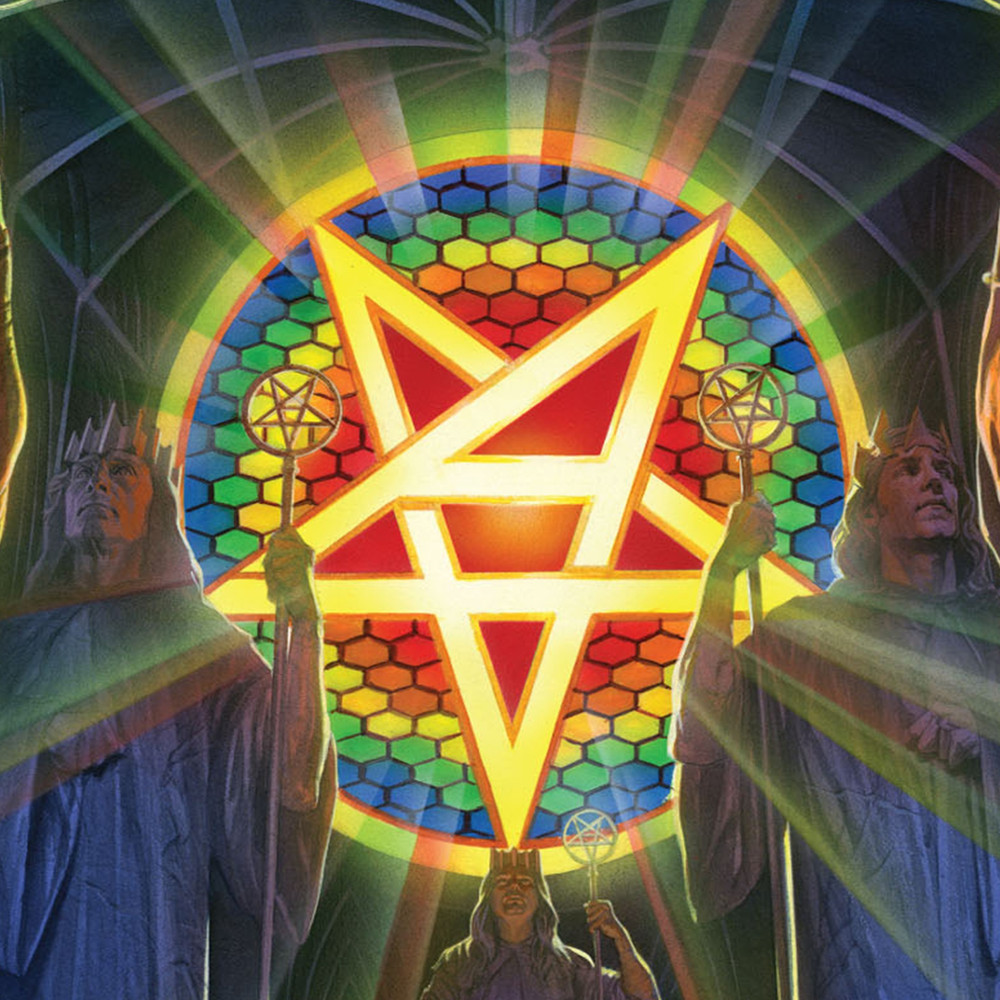
There's something poetic about a band that helped define East Coast thrash squeezing back into a 250-capacity room decades after they first outgrew rooms that size. That's exactly what happened this past Friday when Anthrax played an intimate set at the new Brooklyn location of Saint Vitus Bar, tucked into Bushwick at 428 Troutman Street. The band tore through a cover of Sick Of It All's "Clobberin' Time" and previewed new songs in front of a crowd close enough to read the sweat on Scott Ian's guitar strings. For a band that helped export American thrash to the entire planet, playing a room that size in 2025 isn't a step backward — it's a reminder of where the whole thing started, in sweaty basements and hardcore matinees where the line between metal and punk barely existed.
That connection matters for anyone tracking the current US metal scene, where legacy acts are increasingly choosing club-sized shows over arena spectacle, at least for a night here and there. It's the kind of move that reminds younger bands grinding it out in DIY spaces that the path from basement to headline slot isn't linear, and it never was. If you're building a following in a 200-cap room right now, you're doing exactly what Anthrax did forty years ago — and if you want that kind of stage time yourself, check the region's upcoming shows and start building the relationships that turn into festival slots down the line.
Tägtgren Keeps Feeding the Machine
Meanwhile, industrial metal's most reliably prolific mad scientist is at it again. Peter Tägtgren, the man behind long-running Swedish outfit Pain, told the And Now The Band podcast that he's got at least five more singles planned in the coming months following the release of "I Don't Give A Fukk" via Reigning Phoenix Music. Tägtgren's pitch is that every song will sound meaningfully different from the last — a rolling release strategy rather than a traditional album cycle, which increasingly feels like the default approach for artists trying to stay visible in an algorithm-driven listening environment.
It's a strategy worth watching for domestic industrial acts too. The genre has never been bigger tent than it is right now, swinging from arena-scale acts down to underground programmers running drum machines through distortion pedals in practice spaces. Industrial metal bands operating in that same aggressive, machine-driven pocket — like Sin — are proof the sound still has teeth stateside, and Tägtgren's singles-first model is a blueprint smaller bands without label machinery behind them could realistically pull off themselves. Drop a track every six weeks, keep the sound evolving, never let the algorithm forget you exist. It's not romantic, but it works.
Old Wounds, New Interviews
Nothing gets classic rock message boards moving faster than a decades-old grudge resurfacing, and this week delivered one for the ages. Alex Van Halen, in comments made earlier this year to Brazilian journalist Marcelo Vieira (who translated Van Halen's "Brothers" memoir into Portuguese), called former Van Halen frontman Sammy Hagar a "complete idiot." Hagar, never one to let a shot go unanswered, responded publicly: "I guess the truth hurts sometimes."
"I guess the truth hurts sometimes." — Sammy Hagar, responding to Alex Van Halen
It's a reminder that the wounds from the biggest rock split of the '80s still haven't fully closed, more than three decades on. For anyone tracing the lineage of 80s metal bands and how their internal politics still shape rock discourse today, this is a chapter that refuses to stay buried. Van Halen's rise and fracture remains one of the most-discussed sagas in American hard rock history, and every fresh jab keeps that conversation alive for a generation of fans who weren't even born when Hagar first joined the band.
Farewell Tours and Familiar Faces
Elsewhere, the legacy circuit keeps grinding through 2026 touring plans. Geoff Tate, the singer synonymous with Queensrÿche's landmark concept record "Operation: Mindcrime," told Trust In Rock that his 2026 run performing the album in full will be its last. At 67, Tate says the emotional toll of revisiting that material night after night is real: he described feeling "emotionally drained after every concert." There's something fitting about a prog-metal storyteller closing the book on his signature work with the same intensity he brought to it originally — this isn't a cash-grab victory lap, it's a genuine reckoning with material that clearly still costs him something to perform.
On the opposite end of the emotional spectrum, Twisted Sister brought its new touring configuration to the Alaska State Fair, with former Skid Row belter Sebastian Bach handling lead vocals alongside original members Jay Jay French and Eddie Ojeda. It's the kind of lineup swap that shouldn't work on paper but has clearly connected with crowds, giving longtime fans a chance to hear those anthems delivered with Bach's still-formidable range. Between Tate's emotionally weighty farewell and Twisted Sister's Bach-fueled second act, it's a good week to remember that metal bands touring in 2026 aren't just chasing nostalgia — they're figuring out new ways to keep decades-old catalogs feeling alive.
Sevendust's Long View
Not every band is thinking about endings, though some are at least making peace with the idea. Sevendust guitarist Clint Lowery told Thinking About Guitar's Jonathan Graham that he doesn't try to predict when the band will call it quits, following drummer Morgan Rose's admission that the group discussed breaking up two years ago, before work began on their fifteenth studio album. Lowery's answer was almost spiritual in its simplicity: "I think God will do that for me." For a band that's weathered nu-metal's rise, fall, and ironic resurgence while staying a reliable presence on rock radio and festival bills, that kind of fatalistic patience feels earned. Sevendust's staying power is a useful data point for any band wondering whether longevity requires constant reinvention or just stubborn consistency — sometimes it's both.
The Machines Are Listening
On a less nostalgic note, Accept guitarist Wolf Hoffmann gave voice to something a lot of musicians are quietly wrestling with. Speaking to Portugal's Metal Global, Hoffmann addressed the growing presence of AI-generated music and artwork head-on, calling the quality "overwhelming" while acknowledging the unease that comes with it. It's a conversation that's going to define the next decade of metal production, whether it's AI-assisted mixing, generated cover art, or something more existential about what separates a human performance from a synthetic one. When you're talking about a genre that built its entire mythology around technical mastery and human virtuosity — the kind of chops that populate every list of the best heavy metal songs ever recorded — the AI question isn't abstract. It cuts right at what makes the music matter in the first place.
Doom Keeps Crawling Forward
Away from the industry headlines, the American doom and stoner underground continues its slow, heavy churn largely outside the trade press spotlight. Bands like Evel are part of a broader wave of US doom acts leaning into thick, downtuned riffs and stoner-adjacent atmosphere, a scene that rarely gets the ink it deserves compared to death metal or black metal's dominant footprint in the index. The death-doom hybrid corner of that same world — bands like Demon Lung, Ceremented, and As the Sea Parts — represents one of the more criminally under-covered corners of the American underground right now, a genre built on patience and dread rather than speed and spectacle. If you're compiling your own list of the best metal albums of all time, don't sleep on the doom canon; it's a genre that rewards repeat listens in ways thrash rarely does.
Building the Next Wave
Between legacy acts negotiating their own mortality on stage and industrial veterans testing new release strategies, it's clear the American scene is in a transitional moment heading into 2026 — one foot in nostalgia, one foot testing new ground. That tension is exactly why regional coverage matters. The new metal bands of 2026 aren't going to get discovered through arena tours or podcast circuits; they're going to get discovered in rooms like Saint Vitus, on bills next to bands who've already made the climb once. If you're in a band building that same kind of following right now, don't wait for someone else to tell your story — submit your band and get on the radar before the next wave breaks.